The Surprising Beauty of Uganda’s Wet Season Safaris. When most travelers imagine an African safari, they picture golden savannahs under endless sunshine. But in Uganda, the rainy season transforms the wilderness into something even more magical. From mist-draped forests to emerald plains bursting with life, the wet season reveals a softer, more intimate side of the Pearl of Africa. Fewer crowds, dramatic skies, lush landscapes, and excellent photography conditions make this an underrated time to explore all of Uganda’s national parks.
Annually, Uganda receives about 700 mm to 1500 mm of average rainfall, making it an all-year destination not affected by the weather. Generally, Uganda has two seasons, which are the dry season and the wet season.
The Surprising Beauty of Uganda’s Wet Season Safaris
Uganda’s Safari Destinations during the wet season
Bwindi Impenetrable Forest National Park
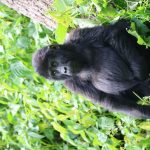
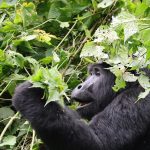
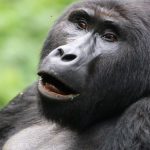
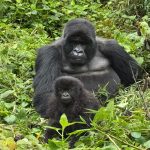
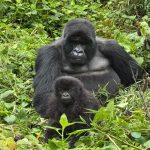
Bwindi Impenetrable Forest National Park is famous for harboring the largest number of the world’s remaining mountain gorillas and about 9 other primate species, including blue monkeys, chimpanzees, vervet monkeys, black and white colobus monkeys. Besides the gorilla trekking experience, Bwindi also offers birding, nature walks, and community encounters.
The weather in Bwindi Impenetrable Forest is unpredictable, as it can rain any day, even during the dry season. During the rainy seasons, the forest becomes even more lush and vibrant. The mist adds a magical atmosphere to photography, and the gorillas often stay at lower altitudes where food is abundant, sometimes shortening trekking distances.
The wet season also means fewer visitors, making the experience quieter and more personal. Bird activity increases, and the forest feels alive with sound. Although trails can be muddy, the scenery is at its most beautiful and dramatic.
Mgahinga Gorilla National Park
Mgahinga is known for its rugged volcanic terrain dominated by Mount Gahinga, Mount Muhavura, and Mount Sabyinyo. The bamboo forests and afro-montane vegetation give the park a unique character.
In the rainy season, the slopes turn deep green, and the volcanoes are often surrounded by scenic clouds that create spectacular views. Gorilla trekking can be slightly easier at times because fresh vegetation grows closer to lower elevations. Golden monkeys are also easier to locate since they feed actively on new bamboo shoots.
Though rain can fall heavily and trails become slippery, the park feels fresh and less crowded. Photographers especially enjoy the dramatic misty landscapes during this time.
Queen Elizabeth National Park
Queen Elizabeth National Park lies along the Rift Valley floor and features open savannah, crater lakes, wetlands, and the Kazinga Channel. Wildlife diversity here is impressive.
During the rainy seasons, March–May and September–November, the park transforms into a green paradise. Fresh grass attracts herbivores, which in turn draw predators such as lions and leopards. This increases the chances of witnessing hunting behavior. The scenery becomes more photogenic with clearer skies after rainfall.
Birdlife flourishes in the wet months, with migratory species arriving and wetlands filling up. Although some tracks may be muddy and tall grass may reduce visibility in certain areas, the abundance of food and water spreads wildlife activity throughout the park, creating dynamic safari moments.
Murchison Falls National Park
Murchison Falls National Park is Uganda’s largest national park, famous for having the world’s most powerful waterfalls. The park supports large herds of wildlife, including giraffes, leopards, lions, Uganda kobs, hartebeest, warthogs, buffaloes, bushbucks, and many more, not forgetting the chimpanzees in Budongo Forest, which is in the southern part of the park.
During the rainy season, the landscapes become lush and green, and the waterfalls are particularly powerful due to increased water volume, offering a more dramatic boat cruise. Predator activities are high due to new grass that attracts prey like antelopes.
Birding is at its best, and there is an abundance of migratory birds. Encountering babies is highly anticipated since the wet season is also the calving season. While some roads can be challenging, wildlife remains abundant, and the scenery is breathtaking.
Kibale Forest National Park
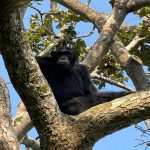
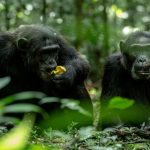
Kibale Forest National Park is a tropical rain forest famous for the highest concentration of chimpanzee and over 13 other primate species. Rainfall occurs throughout the year however, the wet season comes with a cooler and fresher feeling in the forest. During this season, there is food availability making it easier to locate the chimpanzees.
The wet season also enhances birdwatching, with many forest species becoming more vocal. Fewer tourists visit during heavy rains, allowing for a more intimate primate experience. Although trails can be muddy, the forest atmosphere is particularly vibrant and alive.
Kidepo Valley National Park
Kidepo Valley National Park is one of the parks that offers the best classic African Safari feel, unlike all the other parks. Kidepo is in a semi-arid area that receives only one wet season, and that is from April to August.
Wildlife disperses but remains active, and dramatic storm clouds create stunning photographic opportunities.
Calving season for many herbivores often coincides with the rains, increasing predator-prey interactions. The park’s remote nature means it is rarely crowded, even in peak times, so rainy visits feel especially exclusive.
Lake Mburo National Park
Lake Mburo is characterized by rolling hills, acacia woodlands, and several lakes. It is compact and accessible from Kampala.
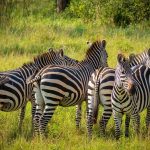
During the rainy season, the park becomes greener and more scenic. Herbivores such as zebras and impalas spread across the plains to graze on fresh grass. This is also a great time for birdwatching as water levels rise and attract aquatic species.
The cooler weather makes walking safaris more comfortable. Although occasional showers may occur, wildlife viewing remains rewarding and the landscapes are picturesque.