Why should you think about volunteering during your Gorilla and Chimpanzee trekking Adventure in Uganda. Embarking on a gorilla and chimpanzee trekking adventure in Uganda is already a once-in-a-lifetime experience, offering a rare chance to connect with some of the world’s most incredible wildlife. But beyond the thrill of the trek itself, there’s an even more meaningful way to make your journey count by volunteering. Giving back to local communities and conservation efforts not only enriches your travel experience but also helps protect the very environments and species you’ve come to admire.
Vibrant Holiday Safaris helps you find volunteering opportunities based on your interests. Volunteer sectors include wildlife centers, religious organizations, community projects, hospitals, and education. You will need to provide scanned copies of your documents and a cover letter to introduce you to the organizations you would want to work with. These should be handled before the travel dates for proper planning, since you will need approval, which sometimes delays due to protocol.
Gorilla trekking in Uganda takes place in Bwindi Impenetrable Forest National Park and Mgahinga Gorilla National Park. Chimpanzee trekking is offered at Kibale Forest National Park, Ngamba Island chimpanzee sanctuary, Kyambura Gorge, and Budongo Forest.
Why should you think about volunteering during your Gorilla and Chimpanzee trekking Adventure in Uganda?
Gorilla Trekking Destinations in Uganda
Bwindi Impenetrable Forest National Park
Bwindi Forest is divided into four main trekking regions Buhoma, Ruhija, Nkuringo, and Rushaga. Each sector offers its own unique terrain, scenery, and gorilla families to track. When planning your trip, it’s essential to know exactly which region your gorilla trekking permit corresponds to, as this will determine the most convenient location for your accommodation. Choosing to stay within or near your trekking sector helps ensure you arrive at the park headquarters in time for the early morning briefing before the trek begins.
Beyond its world-famous gorillas, Bwindi Impenetrable Forest is a living museum of biodiversity. The ancient rainforest, believed to be over 25,000 years old, shelters a vast array of life forms. The park is home to more than 200 species of trees, over 350 species of birds, nine species of primates, and around 88 species of butterflies. Among these are some of East Africa’s rarest wildlife species, making Bwindi a paradise for nature enthusiasts, birders, and researchers alike.
Mgahinga Gorilla National Park
Mgahinga Gorilla National Park forms part of the greater Virunga Conservation Area, which extends into Rwanda and the Democratic Republic of Congo. Currently, one habituated gorilla family in Mgahinga is open to visitors for trekking experiences. The park’s landscape is dominated by high-altitude terrain a series of rolling hills and volcanic slopes. This often serves as temporary resting places for the gorillas during the day.
Aside from gorillas, Mgahinga is also one of the few places in the world where travelers can see the golden monkey, another endangered primate species. These unique monkeys, easily recognized by their golden-orange fur and lively behavior, are a rare sight with only about 4,000 individuals estimated to exist globally.
For hiking enthusiasts, Mgahinga offers an opportunity to climb three of the six majestic Virunga Volcanoes: Mount Muhabura (Muhavura), Mount Sabyinyo, and Mount Gahinga. Each mountain presents a distinct challenge and reward from panoramic views of the Virunga range to encounters with unique alpine vegetation and birdlife. Climbers must be accompanied by a trained park ranger or guide, who ensures safety and helps interpret the park’s rich ecological and cultural heritage during the ascent.
Chimpanzee trekking Destinations in Uganda
Kibale Forest National Park
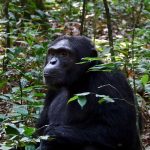
Located in western Uganda, Kibale Forest National Park is widely recognized as the country’s ultimate primate capital, boasting an impressive diversity of 13 primate species, including the world-famous chimpanzees. The park is home to an estimated 1,500 chimpanzees, with about 12 habituated groups open for tourism and research.
Visitors can take part in either chimpanzee trekking or the more immersive chimpanzee habituation experience, both organized by the Uganda Wildlife Authority (UWA). These excursions take place in the morning and afternoon, offering travelers flexibility in planning their safari. Trekking permits are mandatory and can be purchased in advance through UWA or a licensed tour operator.
Why should you think about volunteering during your Gorilla and Chimpanzee trekking Adventure in Uganda?. Beyond chimpanzees, Kibale Forest shelters a remarkable array of primates such as L’Hoest’s monkeys, red-tailed monkeys, bush babies, blue monkeys, vervet monkeys, black-and-white colobus monkeys, and grey-cheeked mangabeys. Bird enthusiasts will also find the park rewarding, as more than 325 bird species have been recorded within its boundaries, making it one of Uganda’s finest birdwatching locations.
Those interested in volunteering or research work within Kibale should obtain formal authorization from the Uganda Wildlife Authority, especially for activities that take place inside the protected area.
Ngamba Island Chimpanzee Sanctuary
Located on Koome Island in Lake Victoria, Ngamba Island Chimpanzee Sanctuary serves as a safe haven for rescued and orphaned chimpanzees that cannot return to the wild. Managed by the Chimpanzee Trust, the sanctuary provides lifelong care and protection for chimps that have been victims of poaching or illegal wildlife trade.
Visitors can reach Ngamba Island by boat from Entebbe and participate in guided tours offered in the morning or afternoon. Activities include watching the chimps during their feeding sessions from a raised viewing platform, taking part in the Caregiver for a Day program, or engaging in educational experiences about conservation and animal welfare.
The sanctuary offers an intimate, ethical way to observe chimpanzees up close while supporting conservation efforts that ensure their continued survival
Kyambura Gorge in Queen Elizabeth National Park
This lush gorge lies deep within the floor of the Great Rift Valley. Where a small chimpanzee population inhabits the forested interior. Tracking chimpanzees here involves a guided hike down into the gorge. It is steep in certain sections but incredibly scenic. Following the ranger’s instructions is vital since the chimpanzees in this area are known to be sensitive and cautious around humans.
Visitors can join either morning or afternoon trekking sessions, and a reasonable level of physical fitness is recommended to manage the terrain comfortably. The reward of spotting chimpanzees swinging through the forest canopy or feeding in the wild is well worth the effort.
After your trek, you can combine the experience with other activities in Queen Elizabeth National Park. Such as a game drive on the Kasenyi plains or a boat safari on the Kazinga Channel. Bird lovers are also in for a treat the park hosts over 605 recorded bird species, including both forest and savannah varieties, making it a hotspot for avian diversity.
Budongo Forest
Situated on the southern edge of Murchison Falls National Park. Budongo Forest is one of East Africa’s largest and oldest mahogany forests. It is famous for both chimpanzee research and tourism-based tracking experiences.
Chimpanzee trekking in Budongo is open to visitors year-round. Opportunities to see other primates like red-tailed monkeys, blue monkeys, grey-cheeked mangabeys, and black-and-white colobus monkeys along the way.
Budongo Forest is also a paradise for birders. Home to numerous forest species such as the puvel’s illadopsis, yellow-footed flycatcher, and African dwarf kingfisher. Keen birdwatchers will find the forest trails both peaceful and rewarding.
Kalinzu Forest
Kalinzu Forest Reserve is one of Uganda’s lesser-known chimpanzee destinations. But an increasingly popular alternative when other parks reach capacity. This protected forest is primarily used for chimpanzee research, yet a section is designated for eco-tourism and public tracking activities.
Chimpanzee trekking in Kalinzu offers an exciting and affordable way to observe these great apes in their natural environment. The trek also provides the opportunity to encounter various primates, butterflies, and colorful bird species. The dense forest trails and distant calls of chimpanzees make for an unforgettable wilderness experience.
Best time to go Gorilla and Chimpanzee trekking with Volunteering in Uganda
The dry season from June to September and December to January is the best season. The trails are dry, less humidity, and the activities are all rewarding. Around rainforests, rain can come at any time. However, chances lessen during the dry season, and these outdoor activities require a moister environment.
However, the dry season also comes with congestion and few options for last-minute bookings.
The wet season, from March to May and October to November, is considered the low season. However, the park is open all year round. During the low season, the trails are muddy and hiking is more difficult. The advantages of the low season are the lush greenery, and most lodges are discounted due to the few tourists.
Is Gorilla and Chimpanzee trekking with Volunteering in Uganda safe?
Why should you think about volunteering during your Gorilla and Chimpanzee trekking Adventure in Uganda?. Uganda is generally safe. Bwindi Impenetrable Forest National Park and Kibale Forest National Park have well-trained armed ranger guides. These are always on the ground to ensure safety in case of any security emergency. The ranger guides are trained and provided by Uganda Wildlife Authority and are required to always patrol the forest. Besides the ranger guides, on the ground, there are also other security organs for extra protection. Tourists are encouraged always to communicate and walk around with a local guide.
To ensure safety during Gorilla and Chimpanzee trekking with Volunteering. The Uganda Wildlife Authority puts in place a briefing before the gorilla trekking experience starts. During the briefing, tourists are taken through the dos and don’ts of gorilla trekking and the latest forest updates.
Gorilla Trekking and Chimpanzee Trekking Rules in Uganda
- If you are affected with communicable infections like cough and flu. You are not allowed to engage in chimpanzee and gorilla trekking.
- Photos are allowed but no flash photography because this may led them to charge.
- Eating and smoking while close to mountain gorillas and chimps is prohibited.
- You have only one hour with the chimpanzee and gorillas in their natural habitat.
- A 7 meters distance should be maintained while in the presence of the chimpanzees and gorillas.
- Chimpanzee and gorilla trekking are not an individual activity. You will be grouped in a group of 8 people to track a gorilla family or chimp community.
- Each gorilla family or chimpanzee community is visited once a day by a group of 6 or 8 individuals.
- Remain in a tight group and always follow the guide’s instructions.
- Avoid direct eye contact with the gorillas and chimpanzees
- In case a gorilla charges, ensure to keep calm and crouch down slowly