Where Are Cheetahs Found In Uganda. Often, people mistake cheetahs for leopards, and in fact, these animals look similar, especially if you don’t pay close attention to their details. The cheetahs are the most diurnal of all the African cat species, and their ability to hunt down several animals lies in their speed, which is the most powerful advantage of the cheetahs. Yes, as they hunt, the cheetahs start at high speed, and if they fail to catch their prey within the first 100 meters of running, they will fail because they cannot sustain their speed for a long period of time as they are running.
Cheetahs are the fastest land mammals and can reach speeds of up to 103 kilometers per hour. However, their speed may vary during a hunt, especially when obstacles block their path or when prey changes direction frequently, forcing them to slow down.
What do Cheetahs prey on?
Cheetahs prey on a variety of prey animals, but primarily on small and medium-sized herbivores, particularly antelopes such as kobs, gazelles, and, much better, impalas. They can also feed on ground birds and some other animals, such as hares or small rabbits. The cheetahs rarely go for big prey such as the wildebeest, the buffaloes, and the elands, which are liked by other predators, especially the lions and leopards. Cheetahs don’t fight much with other predators for food, and if they stay in a park where there are a lot of other predators, then the cheetahs can lose most of the prey that they kill. Cheetahs are very active during the day and they use this tactic to reduce the chance of predation from other predators when they are common during the day.
Thus, by being active, they reduce the competition with the other predators for the available prey. Cheetahs are strong animals and, when living in pairs, they often protect their territory. Compared to larger predators, cheetahs have less power and frequently lose their kills to stronger predators such as lions. They prefer a solitary lifestyle rather than living in groups, and they often roam alone across the wilderness. This is a characteristic that they share with leopards.
Where are Chetahs located in Uganda?
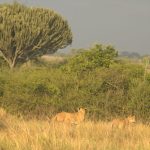
Uganda’s Karamoja region, particularly Kidepo Valley National Park, hosts an estimated population of more than 300 cheetahs. Visitors interested in seeing cheetahs should include Kidepo Valley National Park in their Uganda safari itinerary. Cheetahs thrive in open grasslands, desert vegetation, and areas with tall grass. This kind of vegetation in Uganda fits into Kidepo Valley National Park in the northeastern part of the country. Thus, Kidepo is the wonder of wildlife for you to come and see the wonderful cheetahs on vibrant holiday safaris. Vibrant Holiday Safaris offers you a wonderful wildlife safari to this great park so that you can see the cheetahs.
What do the habitat and ecology of cheetahs look like?
Cheetahs have the best social organization of any of the wild cats when they are in their natural habitats. Most female cheetahs live alone or stay with their cubs, while male cheetahs either live alone or form small groups with two or three other males. Most of the groups of male cheetahs that you see always consist of brothers. However, incidences of unrelated cheetahs have also been found in their habitats. Female cheetahs appear to mate with as many males as possible and show no mate fidelity, unlike male lion coalitions, where a single male from the coalition would defend and mate with a female throughout estrus.
Once you find that their prey keeps moving, the female cheetahs will keep on fowling the prey while the males work in the territory that is attractive to the females. If prey remains in one area, such as Kidepo Valley National Park in Uganda, female and male cheetahs often occupy overlapping or neighboring ranges. In the wild, female cheetahs can live up to 14 years and 5 months, while males can live up to 10 years. However, females usually stop producing cubs after the age of 12. Cheetahs have their first litter at the age of two, after a three-month development period. For the first two months of their lives, the cubs stay in a sheltered refuge while their mother leaves each day to hunt and returns at dusk.
The difference between cheetahs and other cats
It is also important that you differentiate between cheetahs and the other cats, especially when you are in the wild, so that you can avoid confusion because you might end up calling them leopards since they tend to be similar. Long, dull, tear-drop-like streaks run down the sides of the cheetah’s snout from the corners of its eyes to the corners of its mouth. The cheetah has brown skin or coats with numerous dark spots, but the belly is white and the spots on the tail structure are a ring-like example from its body to where the last sections are. The paws are semi-retractable paws that let it have a better grip on the table, especially while it’s hunting for prey or defending its life.
Cheetah reproduction
As part of the reproduction ability, cheetahs don’t have a set mating season, so it can happen at any time, and the female’s incubation phase lasts 90-95 days, following which she will give birth to 2-8 cubs. Most female cheetahs give birth to up to six cubs, but predators kill nearly half of the newborn cubs. Those that persevere and progress reach the stage of sexual development around the age of two. They do survive, both in the wilderness and in captivity. In the wild, they typically live for 10–15 years, but they can live much longer in captivity. Female cheetahs live alone, but male cheetahs form small groups of roughly a few individuals, apparently to strengthen their dominance because they are fiercely defensive.
Therefore, if you are interested in seeing cheetahs in Uganda, visit Uganda and explore Kidepo Valley National Park in the northeastern part of the country. Many travelers compare this park to the Serengeti and Masai Mara National Reserve.
Where Are Cheetahs Found In Uganda