Katwe Crater Lake. The Katwe Explosion Crater is one of the places you must visit when you are in Queen Elizabeth National park for a Safari. The spectacular Mweya Peninsula in Queen Elizabeth National Park, Western Uganda, lies on the northern side of this area. The Katwe Explosion Crater is popular for its breathtaking views that make it a must-visit site for any tourist to encounter in a lifetime.
Tremendous pressure triggered a series of intense volcanic eruptions, leaving several deep hollows that later filled with water and formed the Crater Lakes that you will see during the safari. The area around Katwe underwent this Earth process, creating an extinct explosion crater region, although some of the lakes still emit sulphurous gases that you will observe during your visit. There are basically three main explosion crater concentrations in Uganda and they include the popular Lake Katwe in Queen, the nearby Banyaruguru Crater on the spectacular Kichwamba escarpment in addition to the astonishing Ndali-Kasenda crater near the Kibale Forest National Park. Of all the Katwe Explosion craters, the vast Kyemengo Crater is definitely the most breathtaking.
Visiting the Katwe Crater Lake
Exploring the Katwe Explosion Crater is not just an ordinary visit but a safari that allows you to uncover a lot that you didn’t know about the Park. The locals have stayed around the site as an enclave community within the Queen Elizabeth National Park. These communities have a rich cultural tradition and culture, than you can ever imagine, and are mainly attached to the Crater Lake’s natural offerings. Interestingly, the Lakes around the area don’t have inlets and outlets, hence have become a rich hub for the Mineral Salt consumed in Uganda.
When you visit the place, you will get to learn about the process of salt extraction and how mining plots are arranged and how they are managed. The Processing of Salt products and its eventual distribution is such as rewarding experience that you cannot afford to miss. The Lake Katwe Explosion Crater stands at about 995 meters/3265 feet in terms of depth and the water is extreme saline with no plant or wildlife that can survive except those that need saline conditions to grow such as algae. Volcanic activity within Uganda formed the Crater Lakes only 8,000 to 10,000 years ago, although they appear serene and spectacular today. When these lakes exploded, they caused great damage at vast areas than the Mount Vesuvius at Pompeii.
Facts about Katwe Crater Lake
These craters in Uganda reduced Lake Edward to a poisonous disaster. As recently as 2000 BC (when the Egyptians built the pyramids), great fire and brimstone continued to erupt from the Explosion Craters. This site used to be very lucrative during the Pre-colonial period when salt was still a very valuable mineral in Uganda and beyond.
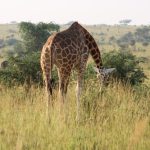
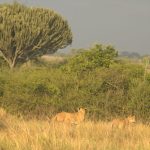
Much as the value of salt reduced, the extraction of the resource is still traditionally persistent for a long time. Most interestingly, the area is a home to several migrant bird species such as the lesser and greater flamingos. Due to its strategic location, the Explosion Crater with its rugged terrains is a favorable habitat for herds of Buffaloes, the savannah elephants and the Olive baboons among other interesting wildlife species. A game drive through the Crater track extending for 27 kilometers (17 miles) rewards tourists with the magnificent views of the area and the vast savanna plains of the Queen Elizabeth National Park especially the Kasenyi plains as well as the western rift Valley, Lake George, the Kazinga Channel, Lake Edward and the Mountains of the Moon.
In conclusion, a visit to the ancient Lake Katwe ranks among the most interesting tourist activities to experience during a safari in Queen Elizabeth National Park with Vibrant Holiday Safaris because it offers tourists stunning views of the park’s vast savannah plains, impressive scenery of the Kazinga Channel, Lake George, Lake Edward, and the breathtaking Mountains of the Moon.